
Why Design Build Contractors Help Your Renovation Stay On Time & On Budget
Renovating a home should feel exciting—not stressful. Yet many homeowners find themselves battling delays, unexpected costs, and endless back-and-forth between contractors, designers, and sub-contractors. If you’ve ever renovated a home, you know the frustration: meet with several contractors, ask for an estimate, the lowest bid wins and then the project comes in higher than expected, change orders pile up, and the schedule slips week after week.
There is a smarter way to renovate a home. Working with experienced design build contractors streamlines the entire process from the first design drawing to the final walkthrough. The design/build approach to renovation is unique. Most contractors simply do not utilize this approach? Why? First, it can cost the contractor more time to refine the details of a project before actually winning the bid. Secondly, the costs are usually much more realistic and therefore, will often be higher than a rough estimate where cost estimates vary dramatically from the actual and final cost. Thirdly, most homeowners do not understand the value of this process and just go with the lowest bid. That can be a recipe for disaster.
In this article, we’ll explore the key benefits of the design/build process for remodeling and renovations to show exactly how and why it is more reliable, keeps projects on time and on budget, and provides a better overall remodeling experience.
What Is the Design Build Contractor Process?
In a traditional renovation project, the homeowner interviews several contractors and asks for estimates. The homeowner typically does not have detailed drawings or specifications and the scope of the project may change with each conversation. Each contractor then estimates the costs based on their perceived scope of work and finish level. These estimates often vary dramatically. If the project is awarded, construction begins and the renovation project proceeds with many unknowns – structural elements still needing to be resolved, missing details, or budget overruns are common only after construction begins.
A Design Build Contractor reverses that sequence. Design and construction are part of the estimating process. Every possible scenario, selection, and finish level is discussed and reviewed, from day one. The design team considers the homeowner’s vision, the entire project design, budgeting, permitting, and construction. There is one contract, one point of contact for accountability. More importantly, there is seamless transparency between the people drawing the design plans and the people responsible for overseeing and executing the project.
This type of detailed collaboration is especially powerful for renovations, where existing conditions—hidden structural issues, outdated systems, or code compliance challenges—can quickly derail a project. When a design build contractor takes on a project, they are responsible for delivering the finished project, so those issues are considered early on and get solved before they become expensive problems. This is a far different approach than bidding a job (perhaps low-balling) and figuring it out later. Most importantly, you won’t waste time and money investing in an architectural or kitchen design only to realize later that it’s out of your budget.
Single Point of Contact Means Fewer Delays and Clearer Communication
One of the biggest time challenges in traditional renovations is the communication gap between design and construction teams. Questions about intent, material substitutions, or field conditions bounce between separate people or companies, often with the owner stuck in the middle as referee.
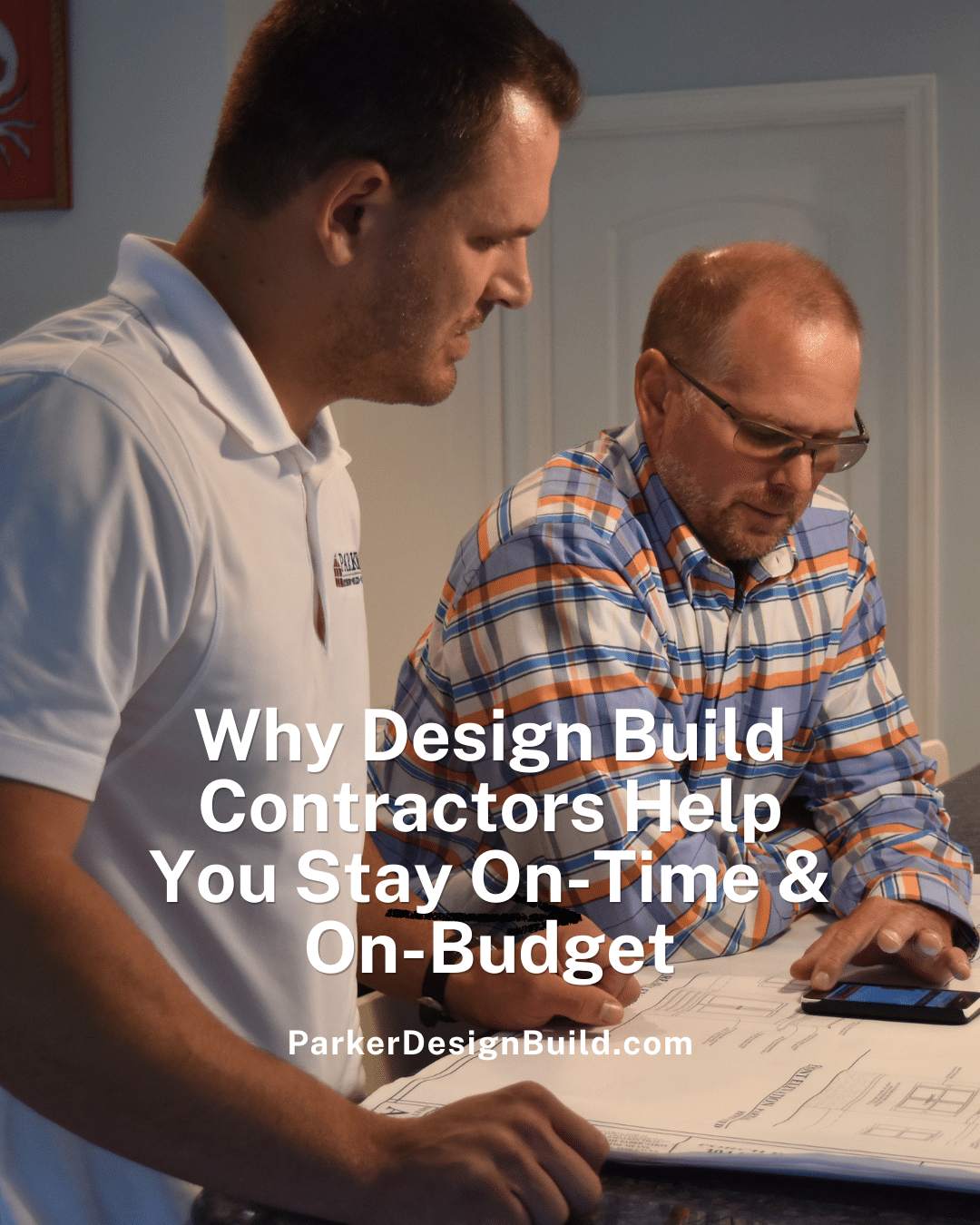
Design build contractors eliminate that friction. You deal with one dedicated project manager that owns both the design intent and the construction execution. Decisions happen faster. requests for information get answered in hours instead of days. Solutions are practical and cost-conscious from the start.
The result? Fewer stalled days waiting for answers and a dramatically reduced risk of miscommunication that leads to rework. When everyone reports to the same leadership and shares the same goals, accountability stays high and progress stays steady. Read our client stories to see how and why this approach works so well.
Overlapping Design and Construction Accelerates the Schedule
Traditional projects follow a linear path: estimate, design, then build. Design/build allows phases to overlap. The detailed design happens first. This process takes longer initially, requires more thought from the homeowner and contractor, but helps alleviate problems later.
Many design build contractors, like Parker Design Build Remodel, also handle permitting and coordination with local authorities as part of the integrated process. Because the same team prepares the documents and will ultimately build them, permit packages tend to be more complete and realistic, reducing review cycles and resubmittals that commonly delay traditional projects.
Continuous Cost Feedback Keeps the Budget Under Control
Budget overruns rank among the top complaints about renovation projects. In the traditional model, detailed cost information arrives only after design is largely finished. By then, expensive redesign is often required to bring numbers back in line—or the owner simply absorbs the extra cost.
However, design build contractors bring estimating expertise into the design phase from the beginning. Value engineering becomes a collaborative conversation rather than a last-minute scramble. Material choices, system selections, and detailing decisions are evaluated for both performance and cost impact while there is still flexibility to adjust.
This early and continuous process is particularly valuable in renovations. Hidden conditions can be budgeted with contingency that is managed transparently. Scope adjustments happen with full understanding of schedule and budget consequences. Owners gain clarity instead of surprises and can make more informed decisions.
Challenges may arise – but they are able to be handled in a solutions-based manner, with consideration for the overall budget, scope and timing. Homeowners can make better decisions based on their priorities rather than feeling stuck between a rock and a hard place.
Fewer Change Orders and Higher Quality Outcomes
Change orders are the silent budget killers of renovation work. Many stem from incomplete drawings, conflicting details, or design decisions made without construction input. When the same team designs and builds, these gaps shrink dramatically.
Details that look elegant on paper but prove difficult or expensive in the field get refined early in the process. Coordination between architectural, structural, and mechanical elements occurs in real time rather than through sequential reviews.
The result is cleaner documents, fewer field conflicts, and less rework. Quality improves because the people responsible for the finished product helped shape the plans.
Collaboration Sparks Better Solutions for Your Specific Project
Every renovation is unique. An older home may need creative solutions for modern living while preserving character. A home addition might require phased construction to keep the project running. Design build contractors excel at these challenges because the full team brainstorms and forms solutions together.
This collaborative culture also supports better risk management. Potential schedule or budget threats are identified earlier, and contingency plans are developed as a team rather than after problems surface. Finger pointing or lack of accountability for the project is negated.
Real Results: On Time and On Budget Renovations
Homeowners who choose the Design/Build approach to remodeling consistently report better experiences. Projects don’t slide, but finish closer to the planned date. Budgets don’t balloon, and value engineering can be done for any unforeseeable issues.
The difference comes down to alignment. When design and construction share the same goals, the same timeline, and the same financial accountability, the entire process becomes more efficient and more predictable.
Ready to Experience the Design/Build Difference?
If you’re planning a renovation and want to avoid the common pitfalls of traditional remodeling methods, partnering with a skilled design build contractor like Parker can transform the experience. From the earliest planning conversations through final completion, an integrated team helps protect your schedule, your budget, and your vision.
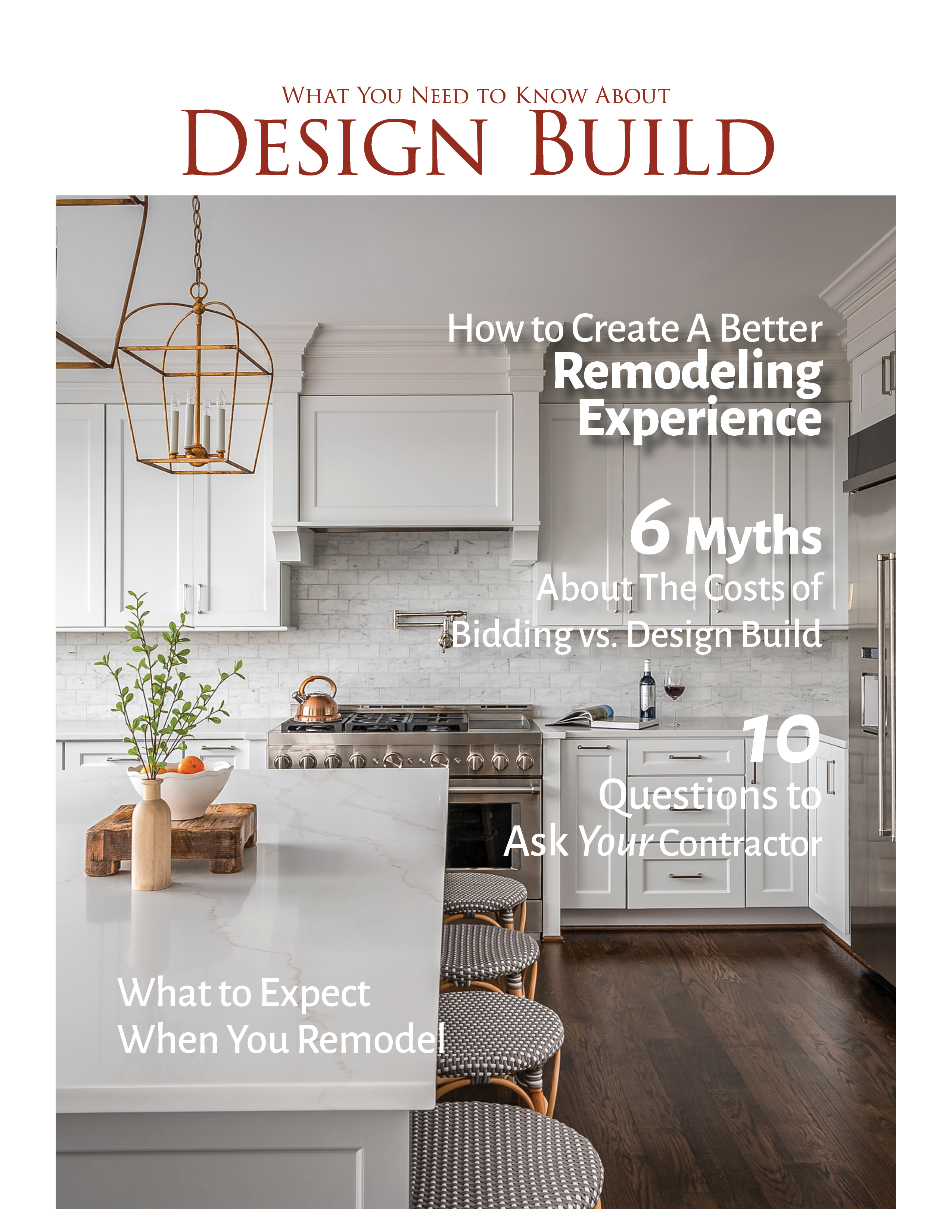
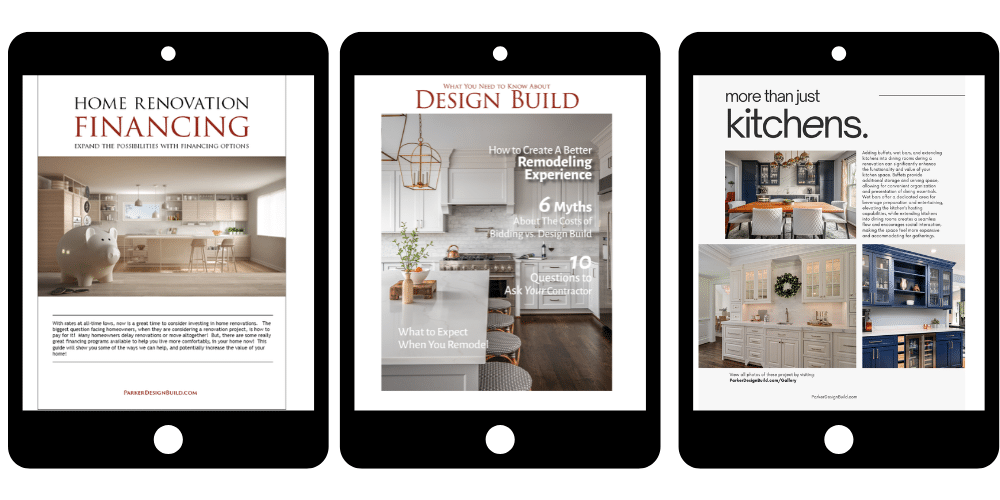 To learn more about how the design/build process works and what to look for when selecting a partner, download our Free Guide to Design Build. This practical resource walks you through the advantages, key questions to ask, and steps to get started on a better, more pleasant, renovation journey.
Whether you’re updating a single room, transforming an entire home, or considering a home addition, the design/build approach offers a clear path forward. Choose collaboration over fragmentation. Choose accountability over finger-pointing. Choose a process designed to deliver results.
Your renovation deserves a team that works together from start to finish. When design build contractors lead the way, that team becomes your greatest advantage. Check out our consistent 5 star rating and client reviews!